


Leaving Home for the Weekend? A Practical Home Security Checklist
Before You Leave for the Weekend, Take One Last Look Around
By Friday afternoon, the weekend plan is usually set. The bags are packed, the route is saved on the phone, and someone is checking whether the hotel confirmation has arrived.
Then comes the familiar last-minute walk through the house.
The kitchen light is switched off. The windows are checked. The front door is locked, and the car is waiting outside. Just before leaving, you glance back at the house—not because anything looks wrong, but because you want to be sure everything is in order.
For many homeowners, that final check is part of getting ready to travel. It can also be a useful moment to think about something that is easy to overlook: what will happen around the property while nobody is home?
An Empty House Still Has a Routine
A home does not stop being active simply because its occupants have gone away. A courier may arrive with a parcel. A neighbor might stop by to return something. Wind can move objects in the yard, and changing light can make an otherwise familiar corner look different.
Most of these events are ordinary. The challenge is knowing what happened when you are not there to see it.
That is where a little preparation can help. Rather than trying to anticipate every possible problem, focus on making your home easier to check and keeping important areas visible.
Start With the Places You Would Check First
Imagine returning home after two days away. Before unpacking, you might naturally look at the front door, the driveway, and the porch. These are the places where you would notice a package, a visitor, or anything that seems out of place.
Those same locations are sensible starting points when reviewing your outdoor security camera coverage.
The Front Entrance
The front door is often where deliveries arrive and visitors make their first stop. If you use a camera here, check whether its view includes the area where parcels are normally placed—not just the door itself.
Move any objects that block the view, and consider how the image changes when the porch is shaded or the sun is low. A camera is more useful when you understand what it can and cannot see.
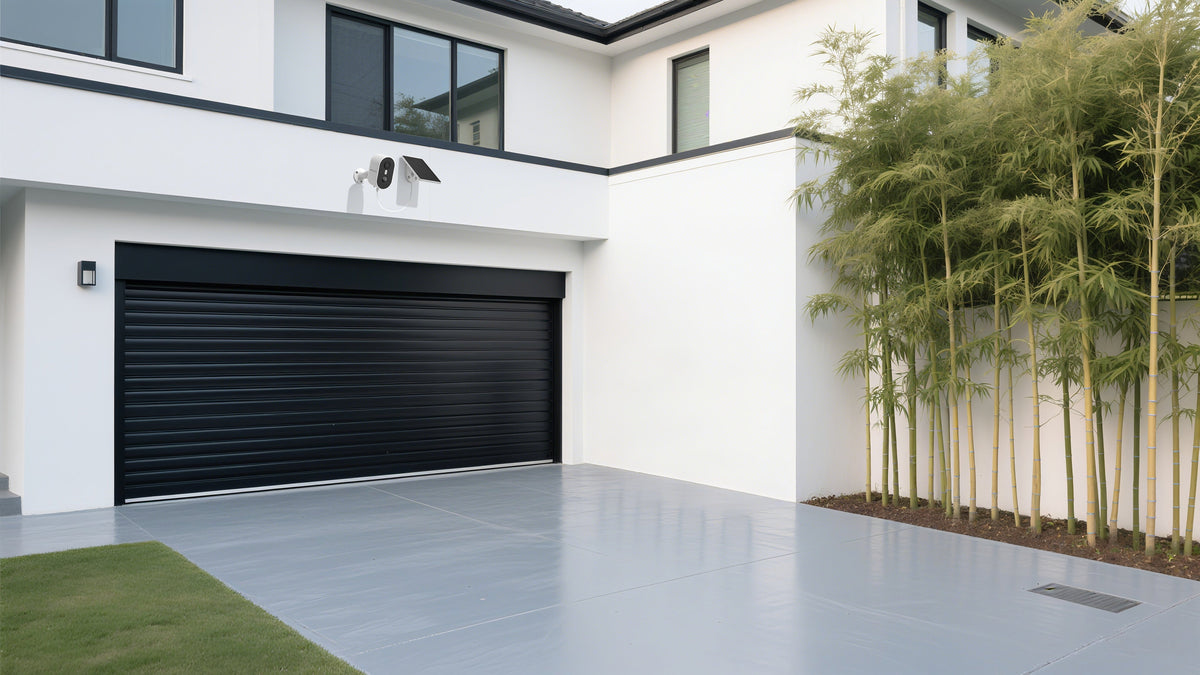
The Driveway and Garage
Cars, bicycles, tools, and other everyday belongings often make the driveway one of the most frequently used parts of a property. If you plan to leave a vehicle at home, check whether your existing camera covers the relevant area.
Do not assume that a camera aimed at the garage door also captures the full driveway. Walls, parked vehicles, and the camera's viewing angle can leave parts of the area outside the frame.
The Side Gate and Backyard
Before travelling, take a moment to walk around the side of the house. Make sure accessible gates are secured and identify any route into the backyard that is not visible from the front.
You may already have enough coverage. If not, a camera positioned to cover an overlooked entrance could provide a more useful view than adding another device beside an area you already monitor.
Choose Equipment That Fits the Installation Location
Not every property has an outdoor power outlet exactly where a camera is needed. For some homeowners, a solar-powered battery camera may offer a practical alternative, provided the installation location meets the model's requirements for sunlight, wireless connectivity, and mounting.
The ANRAN Q3 Max 5MP Solar Battery Camera is one option to review when comparing solar-powered outdoor cameras. Check the current product specifications and installation guidance before deciding whether it suits your property.
You can also compare the ANRAN QV4M5 AOV 5MP Solar Battery Camera to see whether its documented features match your monitoring needs.
For a different installation approach, the ANRAN Q4 Max 5MP Integrated Solar Camera is another model worth exploring. Review the product page for its current specifications and requirements.
When comparing products, look beyond resolution alone. Consider the area you need to see, the camera's supported connectivity, the available storage options, its power requirements, and whether the installation location is suitable.
Make Remote Checking Part of the Plan
Once you are away, a camera can provide another way to check visible activity around your property, depending on the model, connection, settings, and available recordings.
That does not mean you need to keep watching your phone throughout the trip. In fact, repeatedly checking every notification can make it harder to enjoy the time away. It is more useful to understand how your system works before you leave: how to open the live view, where to find recorded footage if supported, and how to adjust alerts for your needs.
Motion alerts also need context. A tree branch moving in the wind, a passing animal, or a person walking along a public path may trigger activity depending on the camera's detection features and settings. Take time to configure alerts according to the product's available controls, and avoid assuming that every notification indicates a security incident.
A camera is a source of information, not a guarantee that every event will be detected or prevented. Reliable connectivity, correct installation, suitable storage settings, and a clear understanding of the device's limits all matter.
The Small Preparations That Still Matter
Technology works best alongside ordinary precautions. Before leaving, lock doors and windows, secure side gates, and avoid leaving valuable items in plain sight through windows. If you have a trusted neighbor, consider arranging parcel collection or asking them to contact you if they notice something that genuinely needs attention.
Be thoughtful about what you share publicly while travelling. Posting detailed travel dates or announcing that the house will be empty can reveal more about your plans than you intended.
If your property is part of a homeowners' association or gated community, check any relevant rules about exterior cameras, installation locations, and recording shared areas. Keep camera views focused on your own property as much as reasonably possible.
A Better Kind of Last-Minute Check
Just before you leave, walk through the house as usual. Then add one more step: look at the property from the outside and ask whether the entrances and areas you care about are adequately covered.
You may discover that your existing setup is sufficient. Or you may spot a blind corner, an obstructed camera, or a gate that needs attention. Those are useful things to find before a trip rather than after you return.
The aim is not to make a weekend away feel like a security operation. It is to take care of a few practical details in advance, so you can spend less time wondering about the house and more time enjoying the reason you left.
Explore your options: Visit the ANRAN security camera collection to compare available models for entrances, driveways, and outdoor areas around your home.
Suscríbete para las últimas actualizaciones
Perspectivas de seguridad y ofertas directamente en tu bandeja de entrada